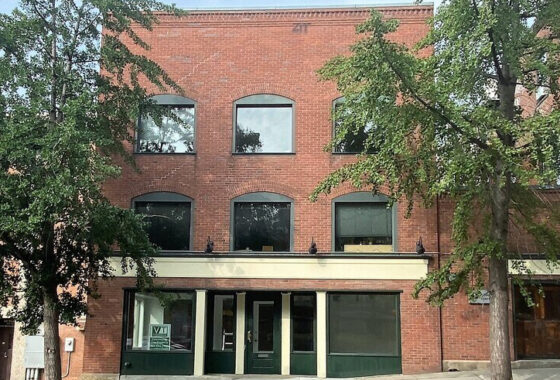
Courtesy of Hughes Commercial
For many business owners, one thing has become abundantly clear in today’s environment: your real estate may be worth more to you as cash than as an owned asset.
That’s why sale-leasebacks—long a staple of corporate finance—are experiencing a major resurgence in 2025. With higher borrowing costs, tighter lending standards, and rapid expansion goals across retail, automotive, c-store, and industrial sectors, companies are looking for ways to unlock capital without taking on new debt.
A sale-leaseback often becomes the smartest move in the playbook.
What’s Driving the Current Sale-Leaseback Wave?
Over the past 12–18 months, we’ve seen a consistent pattern across operators:
1. Banks are requiring more equity.
Higher interest rates have made traditional financing more expensive. Many lenders now require 25–35% equity in commercial deals.
A sale-leaseback converts a fixed asset into liquid capital—often 100%+ monetization compared to what a lender would finance.
2. Expansion is happening fast across multiple industries.
Operators in the c-store, QSR, automotive, and distribution sectors are adding units quickly. Real estate ownership slows expansion; liquidity speeds it up.
3. Investors are actively chasing stable, long-term STNL deals.
Demand for long-term, NNN-leased properties with strong operators hasn’t slowed. Investors want predictable income.
This demand supports strong pricing—meaning owners can often sell at premium valuations while staying in place as the tenant.
How a Sale-Leaseback Actually Creates Value
For many operators, the instinct is to hold onto real estate forever. But in today’s market, a sale-leaseback can be more strategic:
1. Grow the business using your own capital.
Operators free up cash for:
New store openings
Fleet expansion
Technology upgrades
Workforce investment
Debt reduction
2. Reduce balance-sheet pressure.
A sale-leaseback converts a non-income-producing asset into cash while turning occupancy costs into a predictable lease payment.
3. Lock in control of the property.
With a long-term lease (10–20 years), the operator maintains operational control with no disruption.
4. Improve overall return on capital.
Real estate might appreciate 3–6% per year.
Your business might generate 15–30%+ returns.
A sale-leaseback re-allocates capital toward the higher-yield engine.
What Investors Are Looking For Right Now
If you’re considering a sale-leaseback, this is what the market rewards:
Strong operating history and financials
Essential-service businesses (fuel, auto, QSR, medical, logistics)
Corporate or multi-unit guarantees
Long terms (15–20 years preferred)
Rental escalations tied to inflation or fixed growth
If your real estate fits this box, today’s market may assign a cap rate significantly lower than your cost of capital—which is exactly why these deals work.
Is a Sale-Leaseback Right for You?
Here are the questions I encourage owners to ask:
Is your real estate tying up capital that could grow your business?
Are lenders restricting how quickly you can expand?
Do you want to pay off high-interest debt?
Do you expect better returns reinvesting in operations?
Would improved liquidity strengthen your balance sheet?
If the answer is yes to any of these, a sale-leaseback is worth evaluating.
The Bottom Line
In a market where capital efficiency matters more than ever, sale-leasebacks give operators a powerful tool to unlock equity, accelerate growth, and strengthen long-term financial position.
Investors benefit from stable, long-term NNN cash flow.
Operators benefit from liquidity and expansion capital.
It’s a win-win model that’s only gaining momentum in 2025.